

How do foods release their flavours in the mouth? A scientific revolution to decipher our taste sensations
Published on 20 February 2026
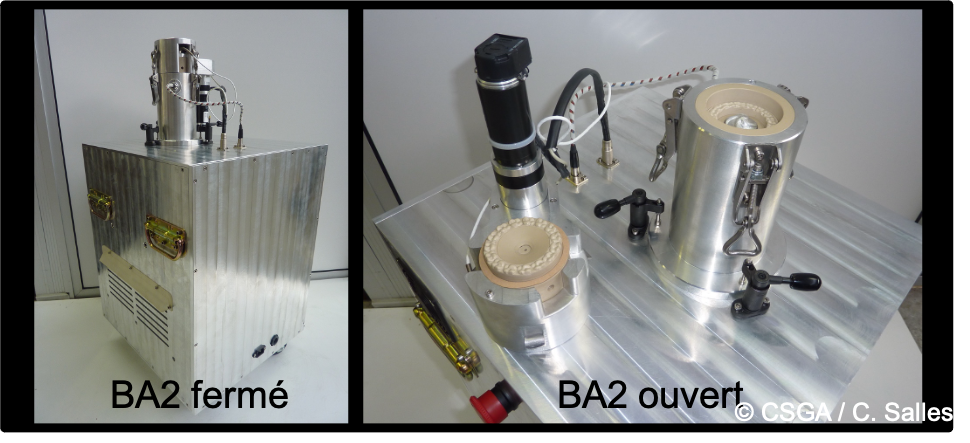
The use of a chewing simulator reveals that the way food is manufactured or prepared has a significant influence on the release of its flavours in the mouth.
When we chew, food breaks down, releasing molecules responsible for flavour. This process, influenced by food texture and our oral physiology, remains difficult to study in vivo.
To address this challenge, researchers have developed an in-vitro device BA2 which is a chewing simulator that accurately replicates human chewing movements based on real data. This tool enables the analysis of aroma and flavour release, as well as food bolus formation, under controlled conditions.
The study presents two practical applications of this device to understand how taste compounds are released during chewing.
The first shows that the release of sodium and glutamate in extruded corn grits depends on its composition. Notably, the presence of oil led to greater release.
The second application analyses the addition of salt ("fleur de sel" and/or fine sea salt) to carrots during or after cooking, and reveals that salting after cooking, with inhomogeneous distribution of the salt, releases sodium briefly but intensely, thereby enhancing the perception of saltiness.
Key words
Chewing simulator device, food breakdown in the mouth, glutamate, salt, release, oral process
Contacts
Christian Salles, FFOP team: christian.salles@inrae.fr