

Justin Flaven-Pouchon

Job
Lecturer (UBE)
Degree (Diploma)
PhD at the University of Burgundy.
Master degree in Neurosciences, cognition and behavior, University of Toulouse.
Activities
Research theme
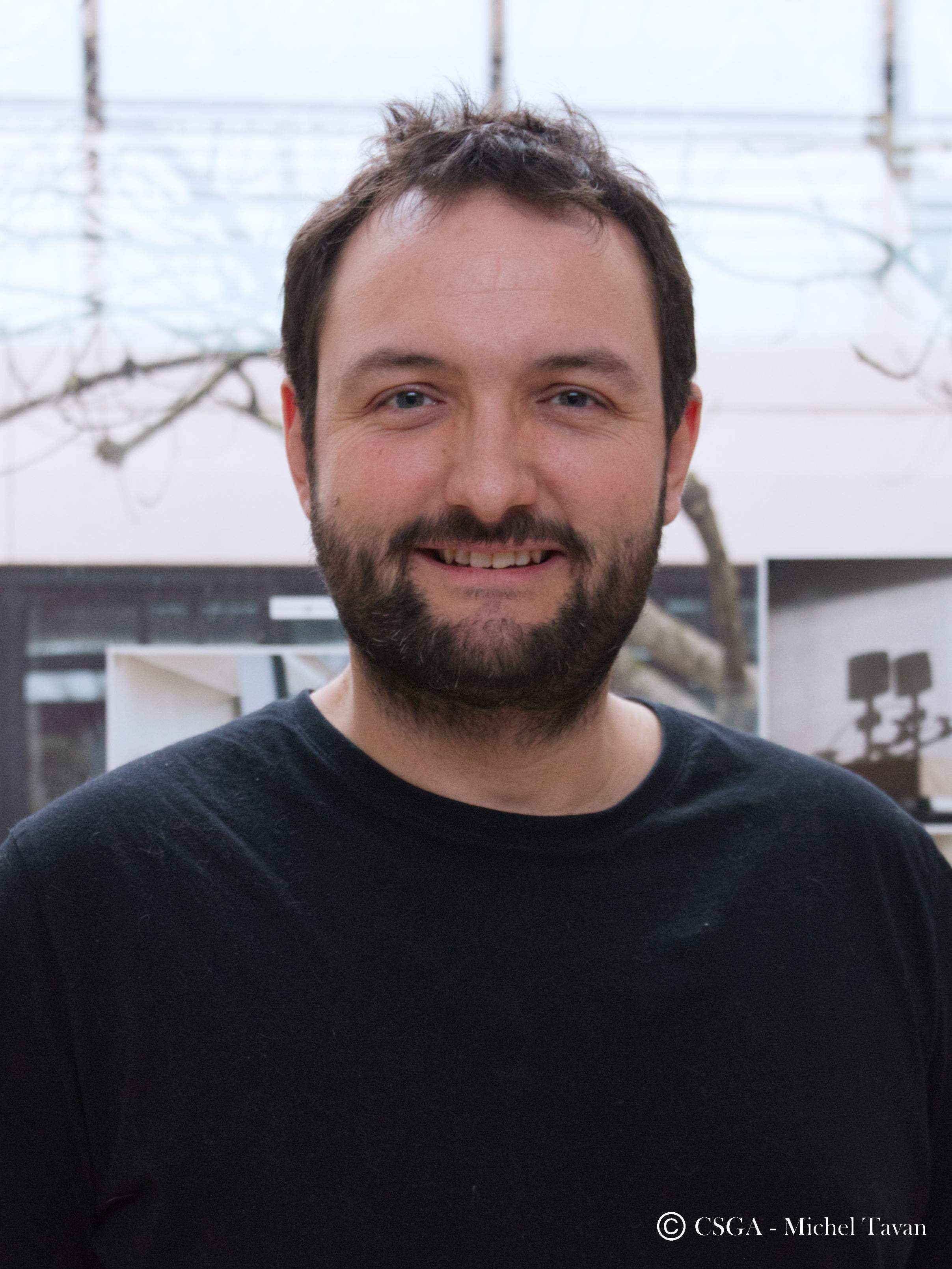
Justin Flaven-Pouchon was hired this year as an assistant professor (ATER) in the 65th section of the CNU to teach courses in cell biology and genetics. He is a member of the GUSTABRAIN team at the Center for Taste and Food Sciences. His research focuses primarily on the relationships between the brain, organs, and behavior, using animal models, particularly the fruit fly. His work specifically addresses food perception, food learning, memory, and the metabolic consequences of diet. After earning a bachelor’s degree in physiology and neuroscience from Claude-Bernard University Lyon 1, he continued his studies at Paul-Sabatier University Toulouse III, where he earned a master’s degree in neuroscience, behavior, and cognition. His early research focused on aversive memory in honeybees and the development of food aversion in Drosophila.
From 2010 to 2014, he completed a Ph.D. in life sciences focused on the perception of fatty acids in Drosophila as well as the metabolic consequences of a diet enriched with fatty acids. His professional career has taken him to France, Chile, and Germany. In particular, he worked at the Interdisciplinary Center for Neuroscience in Valparaíso, and later at the Institute of Cell Biology at the University of Tübingen.
Since September 2024, he has been actively collaborating with researchers studying Drosophila at the CSGA on various projects related to nutrition, particularly on characterizing post-ingestive aversive memory in Drosophila. “Are they capable of learning to avoid foods that have made them sick, and how does this work?” Curiously, this question has yet to be studied extensively in this model organism, despite its relevance to evolution and its potential applications in agronomy. In addition to his scientific work, Justin Flaven-Pouchon has diverse teaching experience with undergraduate students, graduate students, and high school students. He has also supervised numerous master’s and bachelor’s degree interns.
Key Words
Sensory, Neuropeptides, Neurons, Drosophila, Behavior, Metabolism, Glia, Memory, Malaise.
Publications
Flaven-Pouchon, J., Froschauer, C., & Moussian, B. (2024). Dynamics of cuticle-associated transcript profiles during moulting of the bed bug Cimex lectularius. Insect Biochemistry and Molecular Biology, 168, 104112.
Yang, Y., Flaven‐Pouchon, J., Cortot, J., Ferveur, J. F., & Moussian, B. (2024). Colorimetric surface lipid quantification in Drosophila. Archives of Insect Biochemistry and Physiology, 115(2), e22091.
Yang, J., Flaven-Pouchon, J., Yang, Y., Gehring, N., & Moussian, B. (2023). The greenhouse and field insecticide Spirotetramat differentially affects the surface barrier efficiency in non-target Drosophila melanogaster. Entomologia Generalis, 43(2).
Flaven-Pouchon, J., & Moussian, B. (2022). Fluorescent microscopy-based detection of chitin in intact Drosophila melanogaster. Frontiers in Physiology, 13, 856369.
Mokeev, V., Flaven-Pouchon, J., Wang, Y., Gehring, N., & Moussian, B. (2021). Ratio between Lactobacillus plantarum and Acetobacter pomorum on the surface of Drosophila melanogaster adult flies depends on cuticle melanisation. BMC Research Notes, 14, 1-6.
Flaven-Pouchon, J., Alvarez, J. V., Rojas, C., & Ewer, J. (2020). The tanning hormone, bursicon, does not act directly on the epidermis to tan the Drosophila exoskeleton. BMC biology, 18, 1-13.